Leading Lines Photography: One-to-One Tuition in Northamptonshire

Introduction to Leading Lines in Photography
When taking a photograph, one of the most powerful composition techniques you can use is leading lines. This method guides the viewer’s eye through the image, drawing attention to the subject or vanishing point. Whether you’re taking one-to-one photography tuition in Northamptonshire, participating in personalised photography lessons, or attending photography lessons for beginners & advanced, mastering leading lines will improve your photography instantly.
What Are Leading Lines?
Leading lines are visual paths in an image that direct the viewer’s gaze. They can emphasize perspective, depth, and focus, helping tell a story or highlight your subject.
A vanishing point occurs when elements within a scene appear to diminish in size with distance. This principle is fundamental in linear perspective and is a key concept in creating compelling compositions.
Common Leading Line Subjects:
Landscapes
Architecture
Urban environments
Interiors and gardens

Understanding Vanishing Points
Here is a visual example of a picture that has a vanishing point.
A vanishing point is formed when elements within the scene appear to diminish in size the further they are away. The theory behind vanishing points is closely related to linear perspective and how the eye judges distances
.
The main use of the leading line composition in images is when we take photographs of buildings, nature, manufactured environments, and urban areas. However, this composition technique is used in portraits & street photography.

Types of Leading Lines
To teach you how to take a photograph with leading lines is rather difficult over a written blog, so I tend to show visuals to help the understanding of this composition technique. When I taught this composition technique before I also kept to these four line types:
Horizontal
Vertical
Diagonal
Curved
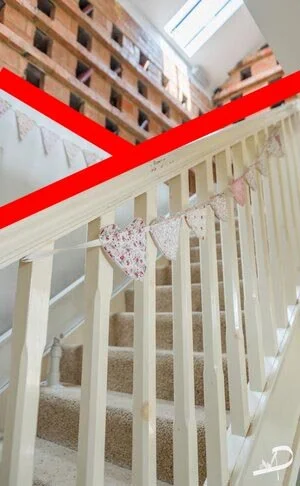
The main challenge that students have when I give them these is thinking about where they see these lines, so I tend to begin with them looking at a staircase. When you look at a staircase you can see horizontal, vertical & diagonal lines. I also encourage them to change their viewpoint on the stairs. This helps to see how the perspective of the viewer changes the form of the leading lines.
Have a quick video to watch with great visuals on understanding the use of Leading lines.
Key points to remember and ask yourself
Tip 1 - Look for lines around you and use them to your advantage.
Tip 2 - Always ask yourself ‘Where is my attention being directed?’.
Tip to remember - ‘A leading line should always point to the subject, not out of the frame or into nowhere.’
So far in this blog, I have explained the four main lines to look for when using the leading lines composition technique in your photograph. I also think you need to consider the vanishing point in your photograph or where you are attempting to lead the viewer. Currently, we are all isolated, so I have decided to include ways to use this composition technique when at home I hope that this next section is useful and will encourage you all to try this.
Applying Leading Lines at Home or Outdoors

If you have any of these types of cameras, bridge, point & shoot or SLR, you can put your settings on auto and have some fun with this composition technique. If you have more knowledge of the exposure setting on your camera, then play with an aperture/shutter priority or manual.
A lovely effect to use when using leading lines is to have a wide aperture, this means the f-stop is at 5.6 or lower. When I refer to lower I mean that the number is lower and if I have referred to a wider aperture, I mean that the camera is letting in more light. When using a wide aperture, you can begin to create depth within a photograph and this visually means that the foreground of a picture becomes blurry or dreamy. (Depth of field)
Here is an example of the use of depth of field (wide aperture) and leading lines.
When shooting an image and using the leading line composition, you will take the image so that you are giving a sense of depth even without a wide aperture.

Using Leading Lines with Mobile Photography
You don’t need a DSLR to experiment. Modern smartphones are fully capable of capturing stunning leading lines:
Turn off or adjust the flash depending on the environment.
Use live mode for movement or motion effects.
Use the timer for precise composition.
Explore built-in filters for creative styling.
Even at home, your lines can lead the viewer to your subject and help you practice this technique consistently.
Helpful mobile photography guides:
iPhone Photography School – Leading Lines Tipsmilar icons on an Android phone.
Using Leading Lines at Home
Even if you’re currently shooting indoors, there are plenty of ways to apply leading lines:
Use furniture, shelves, stairs, or pathways to create horizontal, diagonal, or curved lines.
Look for natural lines formed by shadows, floorboards, or architectural details.
Use a wide aperture (f/5.6 or lower) to create depth of field, blurring the foreground or background for emphasis.
Example: Depth created by leading lines in a room, hallway, or garden path helps guide the viewer’s eye to the subject, even when using a mobile phone camera.


The above images relate to taking a photograph of an entire room. However, you may wish to venture into your garden area which is full of curved lines and this will make it more interesting. The above images only show either a horizontal or a diagonal line. So go into your garden and have a look around, the curved lines could relate to your path, the shadow created by the sun or possibly your flower beds.
To help you consider more options, here are some examples from Google to help give you ideas on how to use leading lines at home.


Summary and Next Steps
Leading lines are a versatile composition tool in photography. By understanding and using horizontal, vertical, diagonal, and curved lines, you can guide your viewer, create depth, and tell a story with your images. Whether you’re using a DSLR or smartphone, indoors or outdoors, this technique is effective for all genres.
Next Steps:
Experiment with different types of leading lines in your home or garden.
Challenge yourself: capture three different types of lines in a single day.
Share your results in the comments!
For further learning, explore my one-to-one photography tuition in Northamptonshire, personalised photography lessons, and photography lessons for beginners & advanced. Transform your creative vision and develop professional skills in composition, lighting, and perspective.
Coming Up: My next blog will focus on Framing in Photography, sign up to stay updated.
Personalised Photography Tuition
Want to master leading lines and other composition techniques?
Book a one-to-one photography tuition session in Northamptonshire to develop your skills in depth, perspective, and storytelling. Receive personalised guidance, practical tips, and hands-on practice to elevate your creative and commercial photograp
Book your session today: sampeel@wellypictures.com