What alpacas taught me about hospitality photography in Northamptonshire

By Samantha Peel | Welly Pictures | Hospitality Photography, NorthamptonshireI have photographed hotels with chandeliers, restaurants with carefully plated food, boutique B&Bs where every cushion has been placed with intention, and spa retreats where the atmosphere is designed to make you breathe out the moment you arrive.
Nothing quite prepared me for the alpacas.
Last autumn, I spent a day and a night at Hideaway Wood Farm near Daventry, an off-grid glamping retreat in a quiet corner of Northamptonshire. The accommodation is canvas, the heating comes from a wood-burner, and the welcome committee is a herd of long-necked, gently curious alpacas who are far more photogenic than they have any right to be.
The arrangement was a business swap: professional hospitality photography in exchange for a night in one of the retreat’s glamping tents. I came away with a gallery of images for the business, but also with a clearer understanding of what makes accommodation photography genuinely useful. The best images do not just show a space; they help a potential guest imagine what it would feel like to stay there.
This experiential approach is exactly what I teach to hospitality business owners (Airbnb hosts, hotel managers, pub/restaurant owners) who are actively looking to increase bookings or covers through powerful, narrative-driven imagery.
What You’ll Learn
Why experience-led images often work harder than empty room shots.
How a business swap can make sense for retreat and glamping photography.
Why animals, people, rituals and small details can help guests imagine a stay.
How light, timing and texture affect glamping and hospitality photography.
What retreat owners can do to create images that support bookings.

Why a business swap can work for hospitality photography
Before I get properly into the alpacas, it is worth explaining the business swap arrangement, because I get asked about this quite often.
A photography barter works best when both sides have a genuine, equal need. Hideaway Wood Farm needed images that could support bookings across its website, social media and platforms such as Airbnb. I needed to experience the retreat properly, rather than arriving for a short shoot, photographing the tents and leaving before the place had revealed itself.
That extra time matters. A photographer who arrives for three hours will create a very different set of images from one who wakes up there at 6am, watches the mist sit low over the paddock, makes coffee beside the tent, and notices an alpaca peering through the canvas with the expression of someone silently reviewing your life choices.
The swap made that second version possible. It allowed me to photograph the retreat as a guest would experience it: arrival, quiet moments, morning light, animals, texture, warmth and the small details that make a stay memorable.
If you run a glamping site, retreat, boutique stay or experiential accommodation, a business swap can be worth considering when it gives both sides something genuinely useful. It is not about devaluing photography. It is about creating the conditions for stronger, more honest imagery when the experience itself is central to the booking decision.
The thing about alpacas
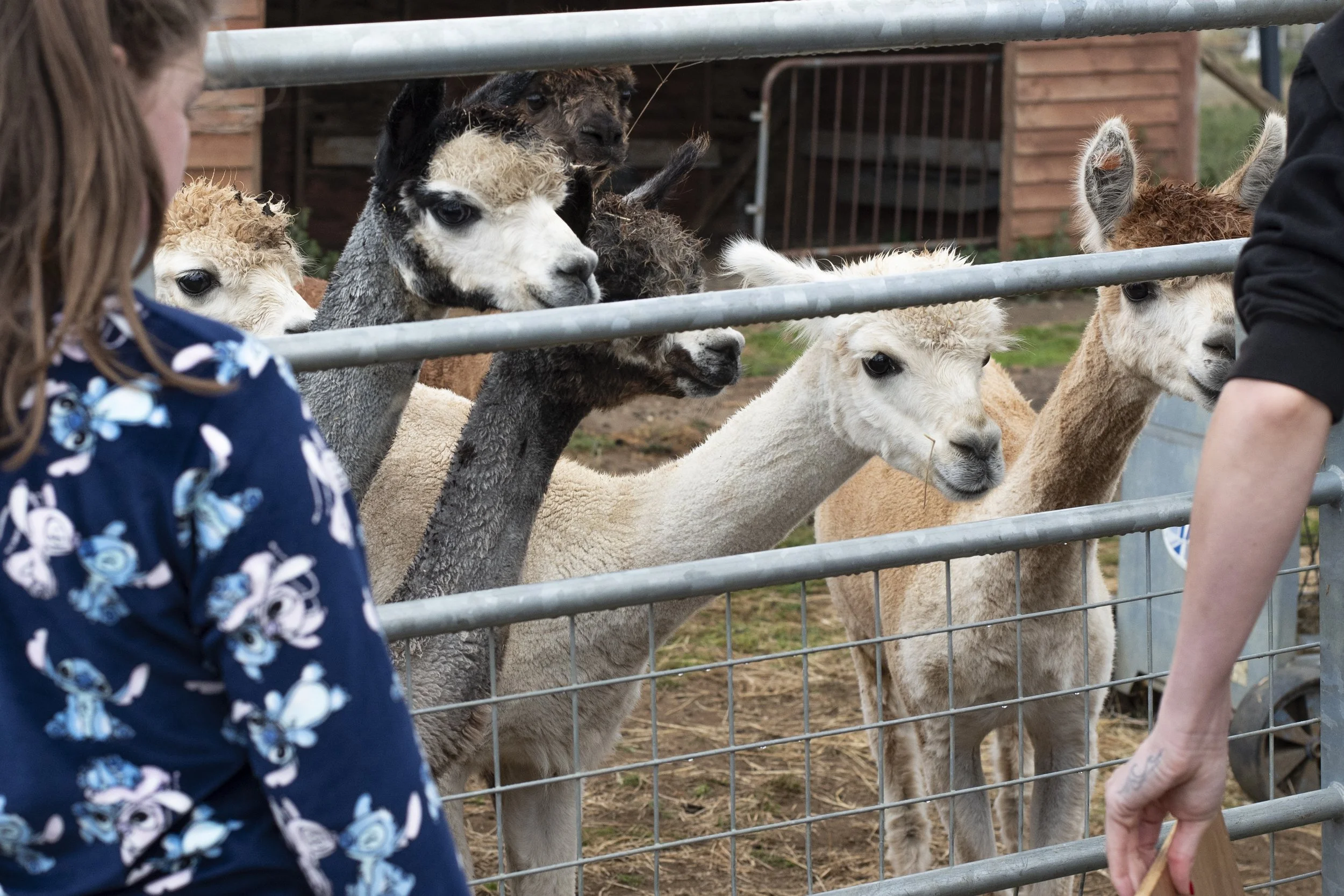
It would be easy to say the alpacas mattered because they were cute. They were, obviously. But photographically, they did something more important: they gave the retreat character.
In hospitality photography, one of the hardest things to capture is belonging. A potential guest needs to look at an image and think, “I can imagine myself there.” Empty interiors can show style, scale and quality, but they do not always show what the stay feels like.
A glamping tent photographed on its own is accommodation. A glamping tent photographed with an alpaca leaning curiously towards the open door becomes a story. It tells a browser, in a second, that this place is calm, rural, slightly playful and unlike a standard hotel room.
The strongest images were the interaction moments: someone feeding an alpaca at the fence, a quiet walk across the paddock, morning coffee with the herd grazing in the background. These images answer the question every potential guest is really asking: what is it like to be here?
You do not need alpacas to create that feeling. Your version might be a fire pit, breakfast tray, woodland path, hot tub, garden view, resident dog, working farm, yoga deck or beautifully made bed. The principle is the same: show the experience, not just the inventory.

Light, texture and the challenge of glamping photography
Glamping photography sits in a particular part of hospitality work. It needs to show comfort and wildness at the same time.
The appeal of a good retreat is that guests feel close to nature without giving up warmth, care and comfort. If the photographs lean too far into luxury interiors, the retreat can lose its sense of escape. If they lean too far into landscape, guests may not understand the quality of the accommodation.
At Hideaway Wood Farm, the balance came from paying attention to three things: morning light, transition spaces and the paddock at different times of day.
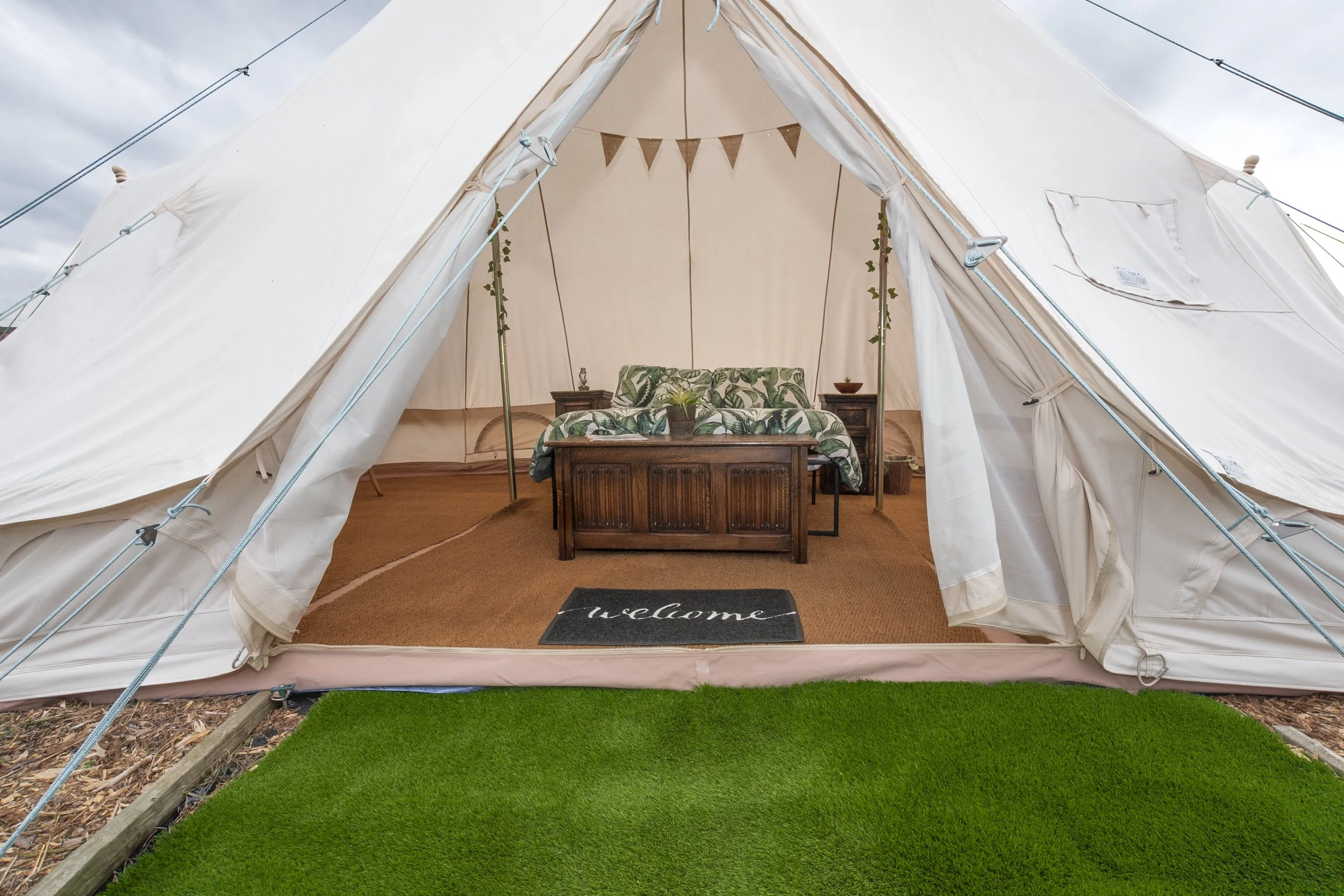
Morning light in the tent interiors made the accommodation feel warm and inviting. Canvas naturally softens early light, so the bed, linens, timber and small details glowed gently without needing flash or artificial lighting.
Transition spaces were just as important as the tent itself. The deck, fire pit, path, wellies by the door, mugs, blankets and outdoor seating all helped show how a guest would move between indoors and outdoors. These details are easy to overlook, but they often make the experience feel real.
The alpaca paddock changed throughout the day. Morning mist gave the scene softness. Afternoon light showed the wider setting. Early evening brought warmth and calm. Photographing the same place at different times created a fuller, more useful gallery.
What retreat owners can take from this
You do not need a glamping site with alpacas to use the same approach. Any hospitality business can create stronger images by thinking less like a property checklist and more like a guest.
Show the experience, not just the space. A guest wants to know what their stay will feel like. Photograph the ritual or detail people remember breakfast on the deck, lighting the fire, arriving at dusk, walking to the sauna, pouring coffee, opening the tent door or watching the animals from the fence.
Shoot at the right time of day. Hospitality photography is deeply affected by light. Midday can be useful, but it is rarely the whole story. Morning and late afternoon often create softer, warmer images that feel more inviting.
Include people carefully. Empty rooms are useful, but they have limits. A person placing breakfast on a table, walking through a gate, settling by the fire or looking out across the field can make an image easier to imagine. The person does not need to face the camera. Often, the photograph feels more natural when they do not.
Think about the sequence. A strong gallery should tell the story of the stay: arrival, first impression, settling in, the special feature, the evening wind-down and the morning after. This helps potential guests stay engaged for longer because they can follow the experience from beginning to end.

Location: Hideaway Wood Farm
Hideaway Wood Farm near Daventry offers off-grid glamping, bring-your-own camping and alpaca experiences in Northamptonshire. It photographs beautifully because the place has been designed with genuine care. There is comfort, but not fussiness. There is character but not gimmick. Most importantly, there is a clear guest experience running through the whole setting.
Let’s Tell Your Property's Story
If you run a retreat, glamping site, boutique hotel, or pub with rooms, your photographs need to do more than just document the space—they need to sell the experience.
Let's collaborate to create images that make your ideal guests say, "I want to be there."
See the work: Explore more of my local projects on the Hospitality & Venues Portfolio Page.
Read the details: Find out how our shoots work on the Our Process Page.
Get started: Ready to book? Contact Sam Today to Discuss Your Project.
Samantha Peel is a commercial and hospitality photographer based in Northamptonshire. Welly Pictures works with hotels, boutique stays, glamping retreats, restaurants and experiential hospitality businesses across Northamptonshire and the UK.