10 Food photography tips to try this weekend
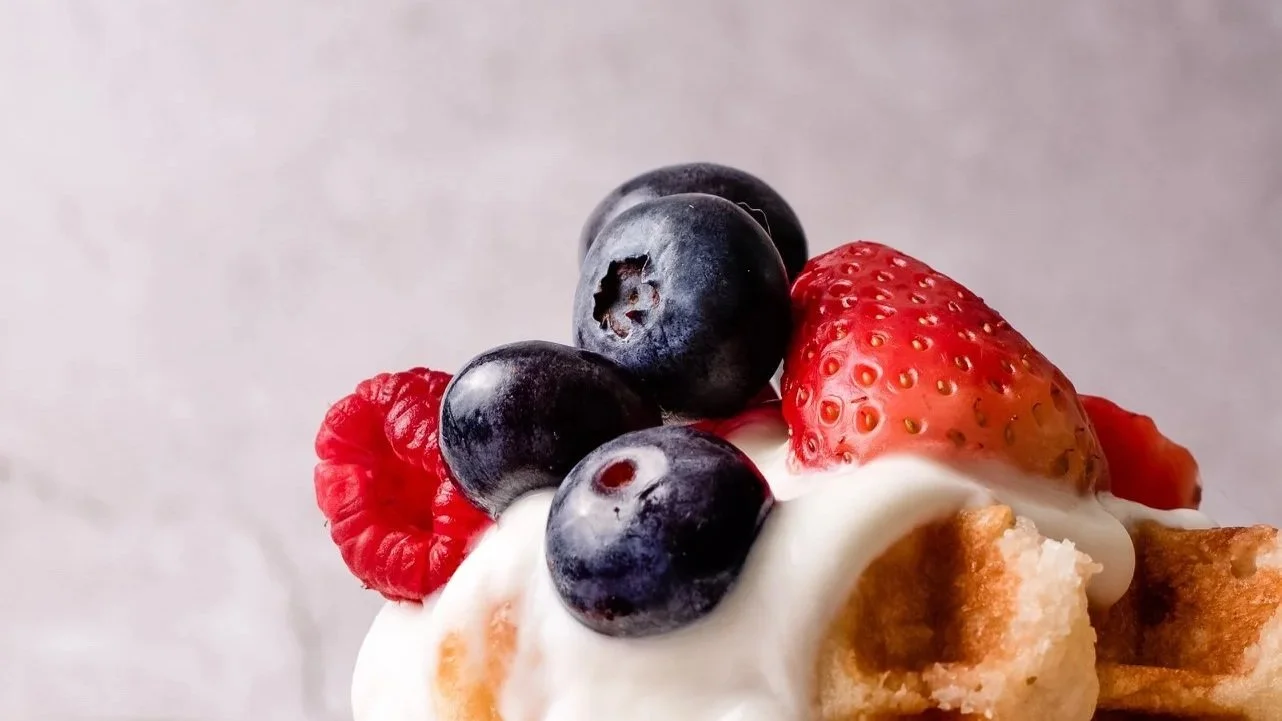
So, you'd like to take better food photographs?
Good news, you don't need a studio full of expensive kit or years of training to see a real difference. You just need a handful of simple habits, applied consistently.
These are the same ten things I think about on every food shoot I do, whether it's a full brand campaign or someone learning the basics in a 1:1 session. No jargon, no assumptions that you already know the lingo and just practical things you can try this weekend.
1. Shoot with proper lighting

Lighting sounds like the "scary" part of photography, but it really doesn't need to be. If you're shooting in daylight, here are three simple ways to shape the light once your scene is set up:
Sidelight — position your light source to the side of your scene, rather than straight in front.
Diffuser — place something translucent between the light and your subject to soften harsh shadows.
Reflector — place this opposite your light source to bounce a little light back onto the parts of the dish that would otherwise fall into shadow.
You don't need proper photography equipment to try this, as a piece of white card or baking paper can act as both a diffuser and a reflector while you experiment.
2. Be organised
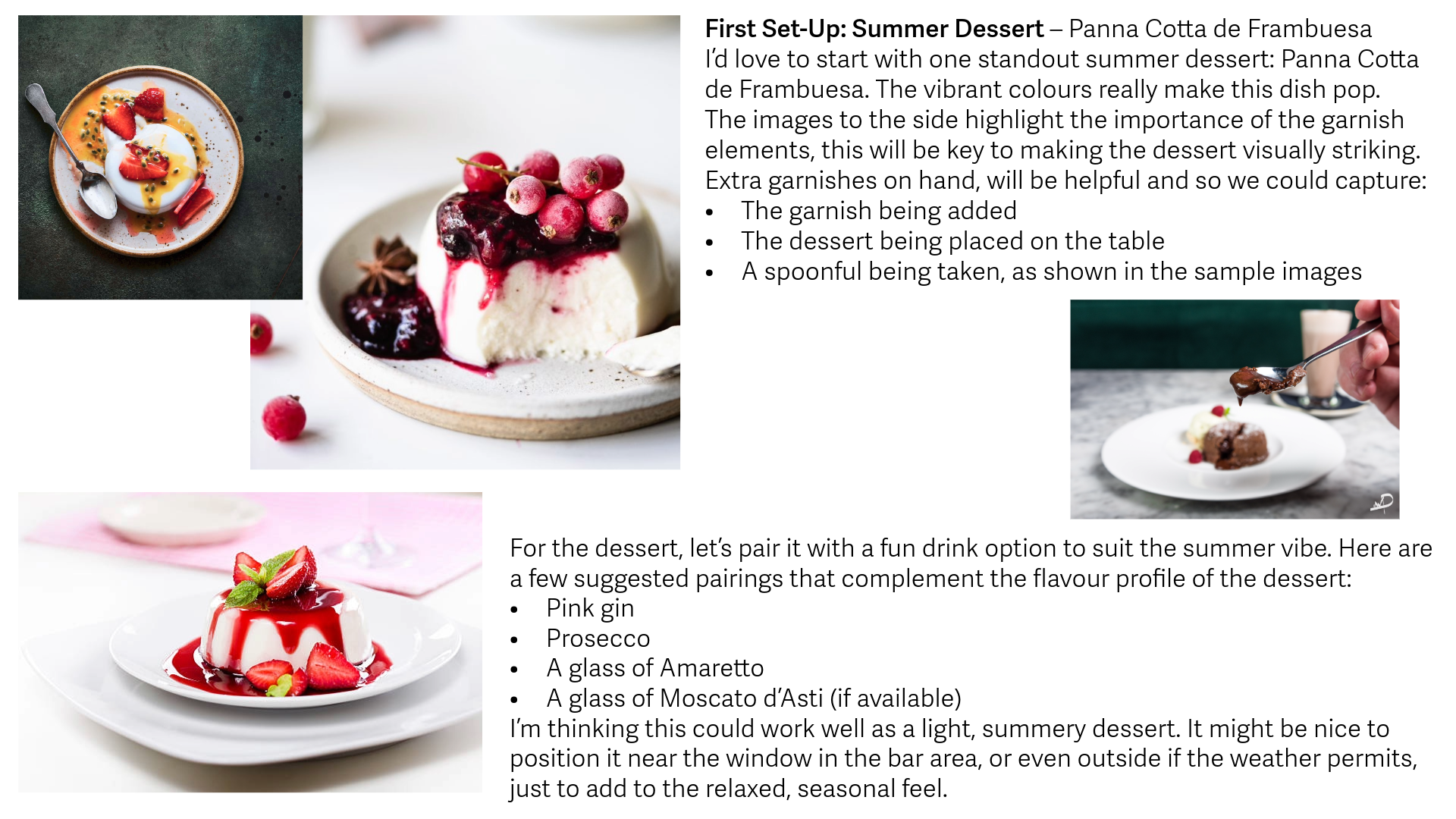
Plan before shoot for images shown below in this blog content
By "organised," I simply mean plan before the camera comes out.
If you're shooting for a recipe book, a brand, or your own social media, think about what the images need to do once they're edited. When I shoot for a client, I always ask what dishes they're cooking, how long each one takes, and what colours tie into the theme. That's the groundwork that makes everything after it easier.
Things worth planning before the shoot:
The style you want for each picture
The colour palette per photo
Props: backdrop, table settings, napkins, cutlery
Glasses or drinks to accompany the dish
A few extra scraps or ingredients scattered around the dish for realism
Try to get the whole scene ready before you start shooting. It's much less stressful than plating, styling, and shooting all at once. Trust me on this one.
3. Tell a story
One of the simplest ways to make food photography more engaging is to think of it as storytelling, not just documentation.
A single image can tell a story, but a series of images does it even better.
· Photographing the process of making a dish
· The ingredients, the mixing, the finished result
· Even the empty plate afterwards
This builds a much richer picture than one polished hero shot. An empty plate isn't a mistake to avoid; it's part of the story, and a lovely reminder that food is meant to be enjoyed, not just admired.
This kind of documentary sequence works brilliantly across a website, a magazine feature, or a run of social posts.
4. Garnish!
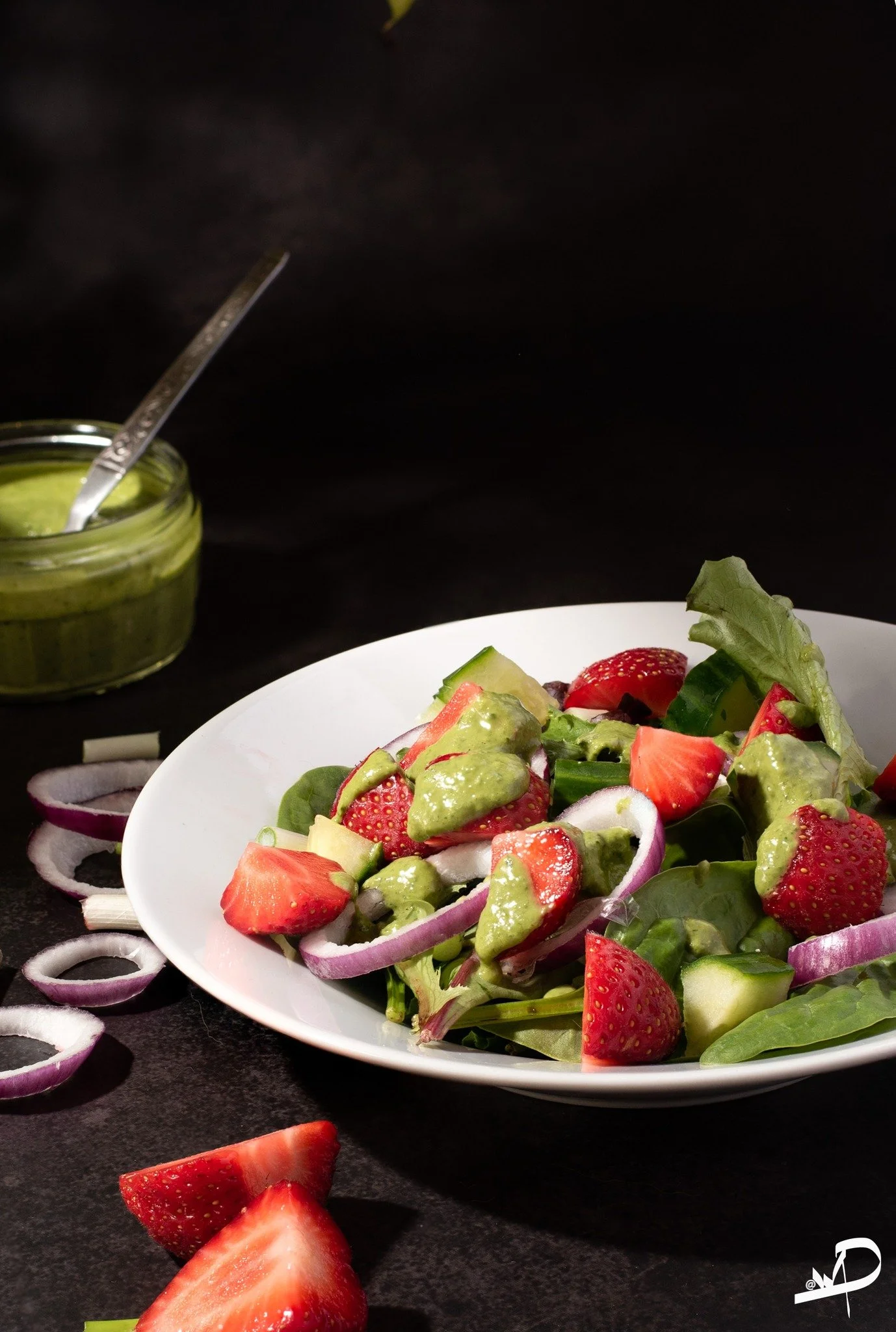
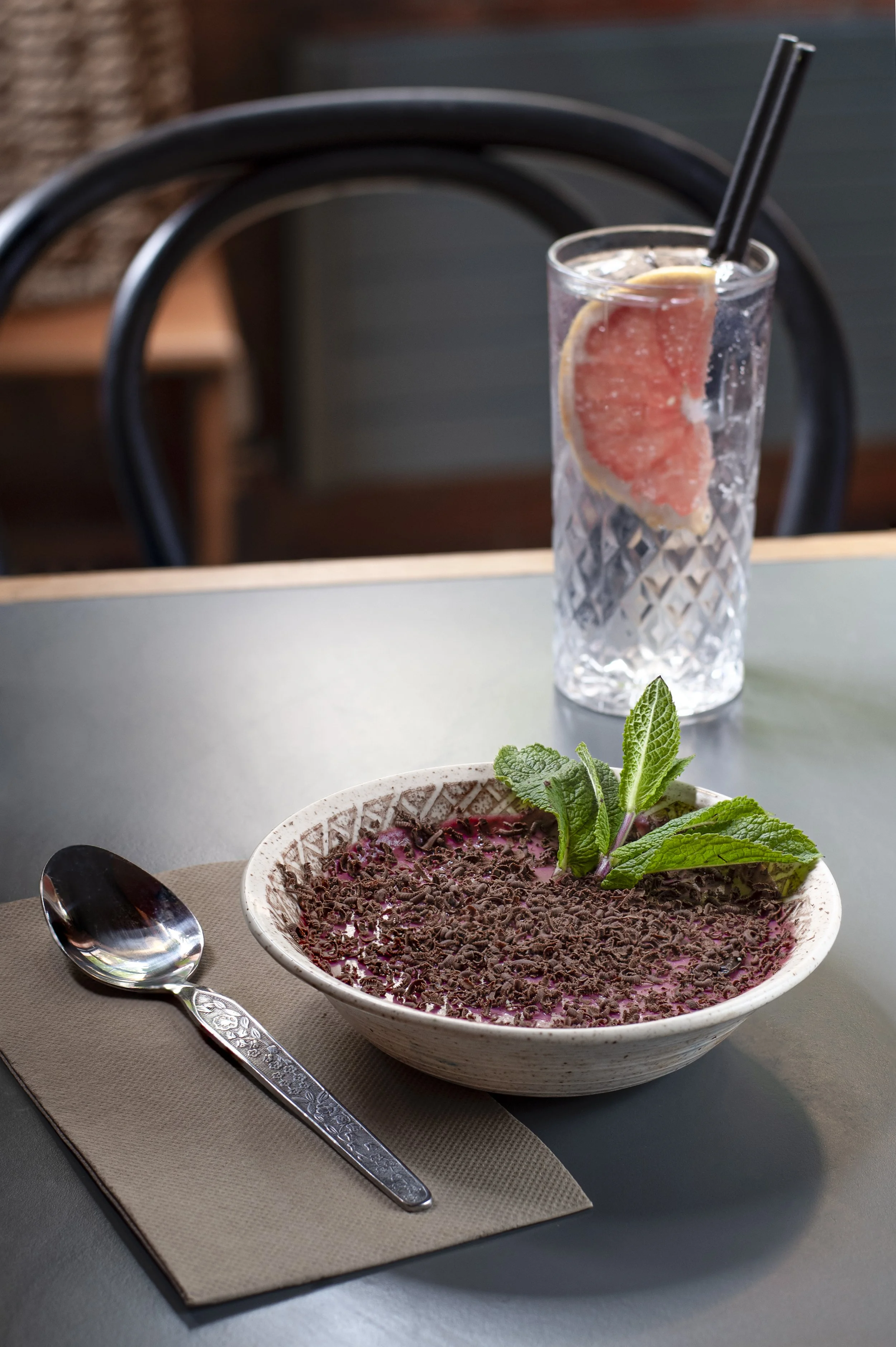
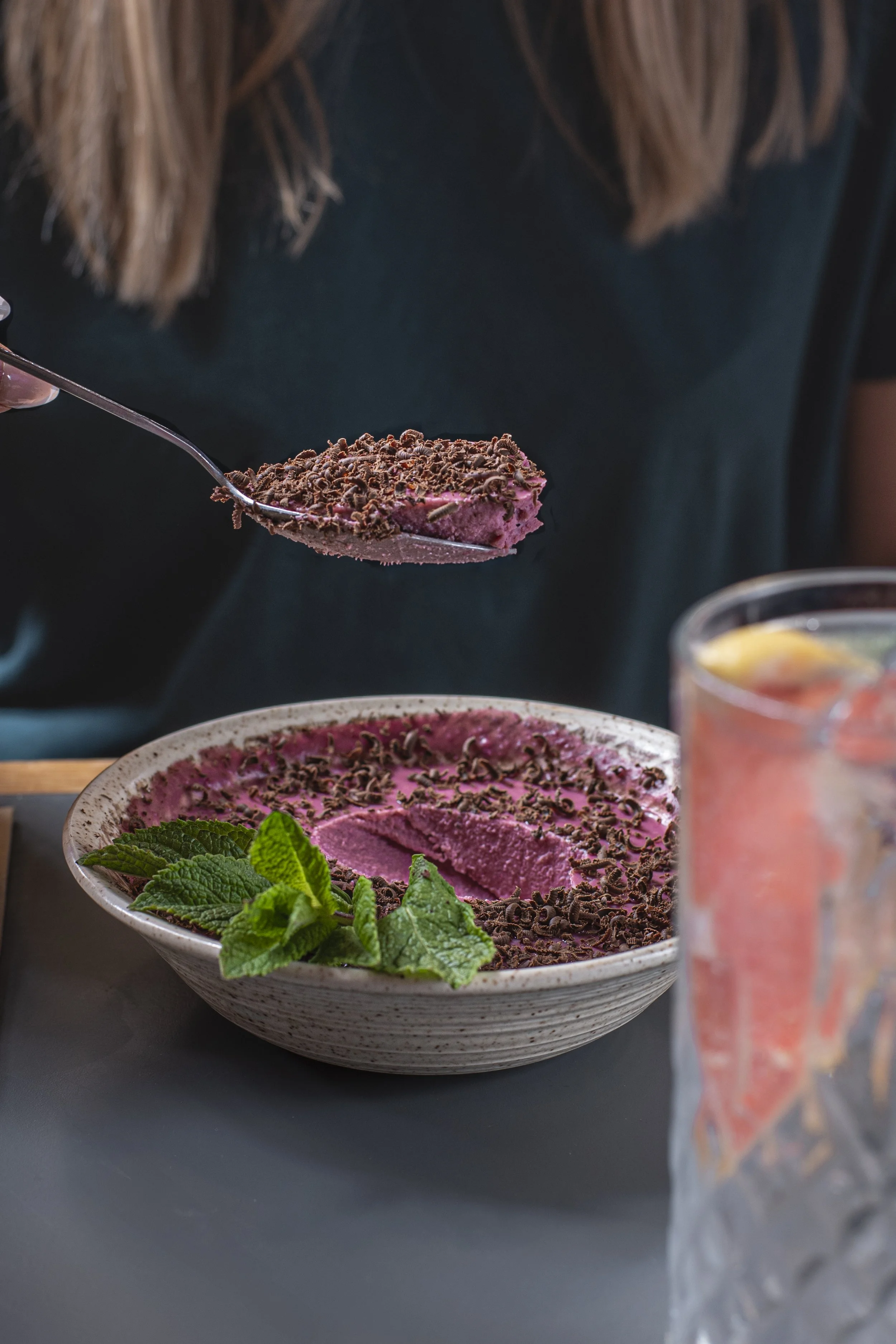
Garnish simply means adding a finishing decorative touch to a dish before you photograph it and it makes a bigger difference than you'd think.
It doesn't have to be a sprinkle of herbs on a savoury plate. It can just as easily be a spare ingredient from the recipe placed near the dish, a scattering of the same spice used in the cooking, or a sweet flourish on a dessert. Whatever it is, it adds a little extra story and texture to the final photograph.
5. Be inspired
Before any shoot, I like to look at other people's work for inspiration. There's no shame in it, and it genuinely sharpens your eye. A few food photographers whose work I keep coming back to:
Have a browse, notice what draws your eye, and don't be afraid to borrow a lighting idea or a styling choice you like.
6. Invest in some backdrops
If you're shooting on location and the space doesn't quite match the mood you're going for, a simple backdrop can solve that instantly. A couple of good, versatile backdrops (a light wood tone and a darker, moodier one) will cover most situations you'll come across.
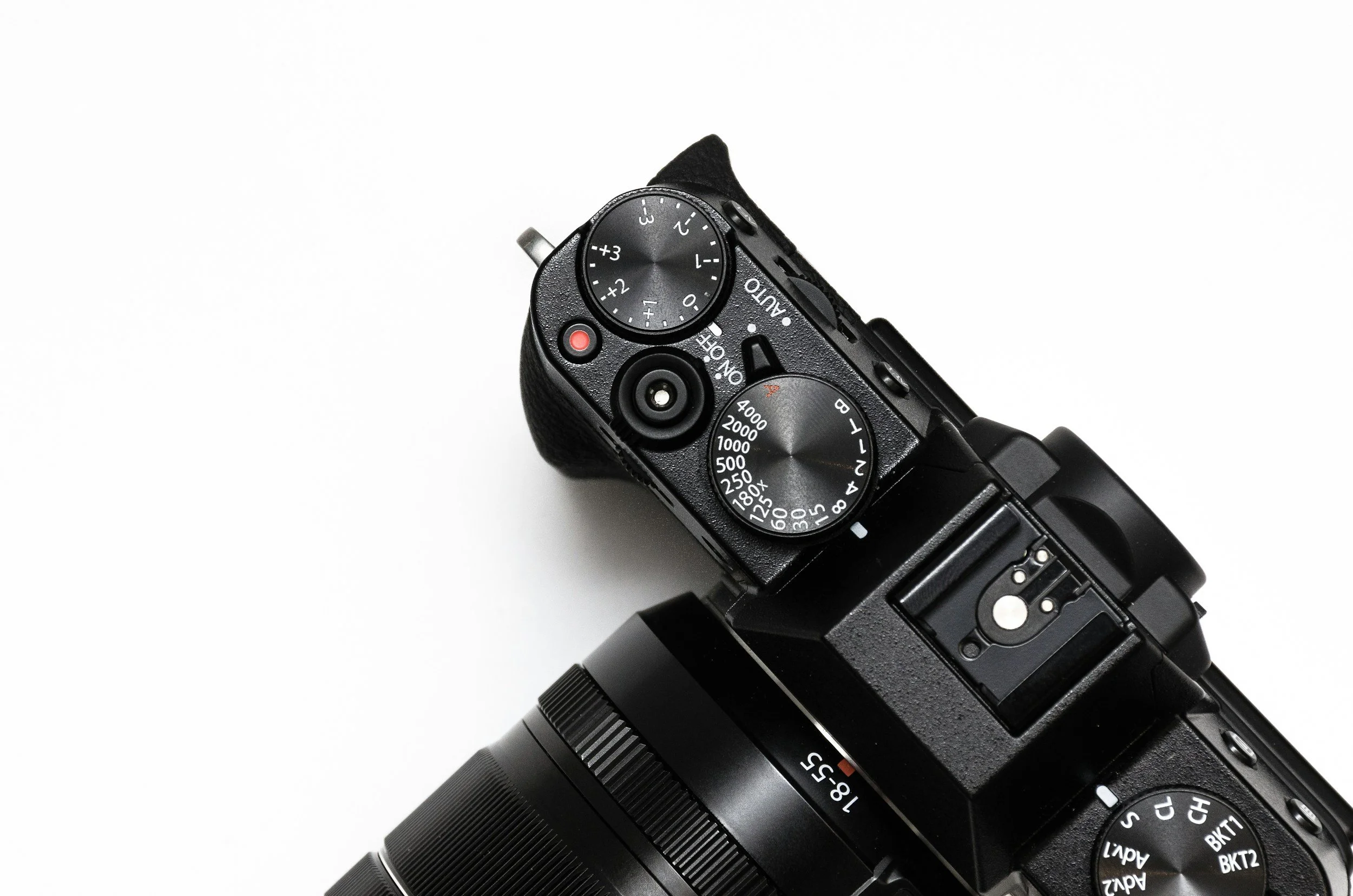
7. If you're using a DSLR, learn manual mode
I know that manual mode has a reputation for being intimidating. But it's genuinely one of the simplest things to learn, and it gives you so much more control over your images than auto mode ever will. Like anything, it just takes a bit of practice before it clicks.
8. Invest in a good lens
Most cameras come with a kit lens, which is perfectly fine to start with, but food photography really comes into its own with a 50mm lens. If you're looking to buy one, you'll typically find a choice between an f/1.4 and an f/1.8. The 1.4 costs more because it has a wider aperture, but both are excellent choices for food photography (and portraits too), so is a solid investment.
9. Composition (triangles and colour)
Colour is one of the simplest things you can control to make a food photograph pop. It's worth learning a little about complementary colours (opposites that make each other stand out) and harmonious colours (similar tones that sit together calmly). The same principles are used in advertising photography.
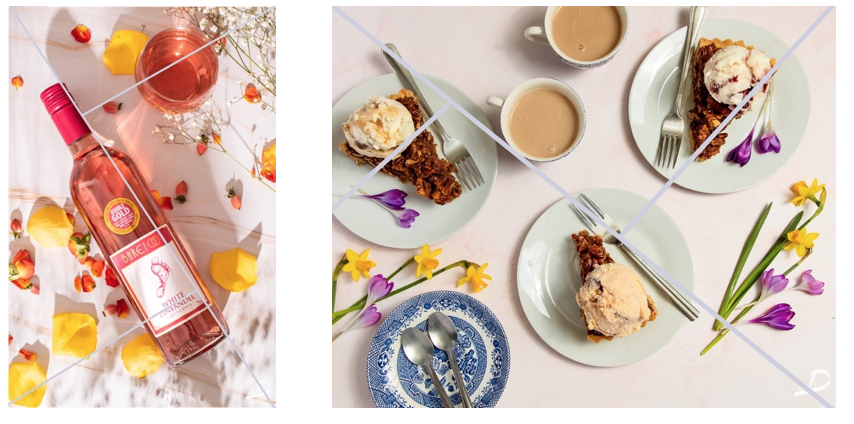
Composition matters just as much. The most common composition in food photography is the triangle. Arranging elements on the plate or in the scene so your eye naturally traces a triangular shape through the frame. It's a small trick, but it makes a surprising difference to how balanced an image feels.
10. Edit, but please do less and gentle.
Editing is the finishing touch, not a fix-all. A small boost to colour, tone, or lighting can lift an image nicely. I'd recommend building yourself a simple preset in Lightroom that you can apply consistently across a shoot, so all your images feel part of the same set.
Just don't over-edit. The goal is for the food to still look like food, which is natural, appetising, and true to life.
I hope this has given you a few new things to try this weekend. I'd love to hear your suggestions in the comments below after reading this.
Not sure how to tell your brand's story through food photography, or where to even start with your own shoot? I'm always happy to hop on a quick call to brainstorm some creative directions for you, no pressure, just a chat.
Learn or Create: Food Photography 1:1 & Shoot Sessions
Whether you'd like to master food photography with a personalised 1:1 session or book a professional shoot for your brand. We can help you capture images that genuinely stand out on social media and across your marketing materials.